April 16, 2026

admin

Navigating the digital realm of cryptocurrency can seem daunting, but understanding how to buy Bitcoin with a credit card on Trust Wallet is surprisingly straightforward. This guide breaks down the process, from setting up your Trust Wallet account to completing your first Bitcoin purchase, providing clear and concise steps to help you securely acquire Bitcoin.

Trust Wallet, a popular cryptocurrency wallet, offers a convenient way to buy and manage Bitcoin. It connects you to various platforms that allow credit card transactions. However, security is paramount, so we’ll cover crucial safety measures to protect your funds.

Introduction to Bitcoin and Trust Wallet

Bitcoin is a decentralized digital currency, meaning it isn’t controlled by any single institution. Its value comes from its scarcity and the cryptographic security that ensures its transactions are verifiable and secure. Bitcoin’s primary purpose is to facilitate peer-to-peer transactions, eliminating the need for intermediaries like banks. This decentralized nature contributes to its value and appeal to many users.Trust Wallet is a digital wallet application that allows users to store, manage, and send cryptocurrencies like Bitcoin.

It simplifies the complex process of cryptocurrency transactions, providing a user-friendly interface for interacting with the blockchain. It’s crucial for securely holding and exchanging Bitcoin, and many other cryptocurrencies.

Bitcoin

Bitcoin is a digital or virtual currency created in 2009. It functions as a medium of exchange, similar to traditional currencies, but without the need for intermediaries. Its decentralized nature, secured by cryptography, makes it attractive to many users seeking alternative financial solutions. Its value fluctuates based on market forces, supply, and demand.

Trust Wallet

Trust Wallet is a mobile and desktop application that acts as a digital wallet for storing and managing cryptocurrencies, including Bitcoin. It facilitates transactions by enabling users to send and receive cryptocurrencies directly, and it offers a secure platform for managing assets. It supports a wide range of cryptocurrencies, providing a versatile solution for managing a diverse portfolio.

Cryptocurrency Transactions

Cryptocurrency transactions are recorded on a distributed ledger called a blockchain. This public ledger ensures transparency and security by recording every transaction in a verifiable and unchangeable manner. Transactions are validated by a network of computers, making the process secure and efficient. A key concept in cryptocurrency transactions is the use of private and public keys, which allow for secure and controlled access to digital assets.

Buying Bitcoin

The process of buying Bitcoin typically involves selecting a platform, depositing funds, and initiating a purchase. This can vary from centralized exchanges to decentralized exchanges. The platform may use various payment methods, such as credit cards, bank transfers, or other cryptocurrencies. Choosing a reliable platform and understanding the transaction fees associated with each platform is important for a smooth and efficient purchase.

Comparison Table

Bitcoin Trust Wallet Cryptocurrency Transactions
Decentralized digital currency Mobile/desktop cryptocurrency wallet Recorded on a distributed ledger (blockchain)
Medium of exchange Facilitates cryptocurrency transactions Uses public and private keys for security
Value fluctuates based on market forces Provides secure storage and management of crypto Validated by a network of computers

Methods for Buying Bitcoin with Credit Cards on Trust Wallet

Acquiring Bitcoin using credit cards on Trust Wallet offers a convenient method for newcomers and seasoned users alike. This process involves utilizing third-party platforms that facilitate the exchange of fiat currency (like USD) for Bitcoin. Understanding the various platforms, their procedures, and associated risks is crucial for a smooth and secure transaction.Different platforms employ diverse methodologies for processing credit card payments, influencing the transaction fees and overall user experience.

Security measures employed by these platforms vary, so it’s essential to choose reputable and well-established services to minimize the risk of fraudulent activities.

Available Platforms for Bitcoin Purchases

Several platforms allow users to buy Bitcoin using credit cards. These platforms often operate on a commission-based structure, reflecting the cost of facilitating the transaction. Popular choices include reputable cryptocurrency exchanges, specialized Bitcoin purchasing services, and peer-to-peer (P2P) trading platforms. Each platform has its own strengths and weaknesses, which we will explore further.

Steps for Purchasing Bitcoin Using Different Platforms

The exact steps for purchasing Bitcoin vary depending on the platform used. Generally, the process involves registering an account, providing necessary details, selecting the desired Bitcoin amount, authorizing the payment via credit card, and confirming the transaction. Users should meticulously review the platform’s specific instructions for a smooth and secure experience.

  • Cryptocurrency Exchanges: These platforms typically involve creating an account, verifying your identity, depositing funds, and initiating the purchase of Bitcoin. Specific steps vary depending on the exchange. Examples include Coinbase, Kraken, or Gemini.
  • Specialized Bitcoin Purchasing Services: These services often have a streamlined process, focusing primarily on the Bitcoin purchase. These services are typically designed to be more user-friendly and may have a slightly higher transaction fee than exchanges. An example is a service like Coinmama.
  • P2P Trading Platforms: These platforms connect buyers and sellers directly, often allowing for more customized transaction terms and potentially lower fees compared to exchanges. However, users should be aware of the added risks associated with dealing directly with other users, including the potential for fraud or scams. Examples include LocalBitcoins or Paxful.

Security Considerations

Protecting your credit card information and funds when purchasing Bitcoin is paramount. Always choose reputable platforms with robust security measures in place. Verify the platform’s security certifications and ensure it employs secure encryption protocols. Furthermore, be cautious of suspicious requests for personal information and promptly report any unusual activity.

Transaction Fees

Transaction fees associated with Bitcoin purchases vary across platforms. These fees can be influenced by several factors, including the platform’s commission structure, the transaction volume, and the specific method employed for the payment processing. Fees can be expressed as a percentage of the purchase amount or as a flat rate.

Comparison of Platforms

Platform Pros Cons Purchase Steps (Summary)
Cryptocurrency Exchanges (e.g., Coinbase) Established reputation, wide range of features, secure platform Potentially higher fees, more complex interface for beginners Create account, verify identity, fund account, initiate purchase.
Specialized Bitcoin Purchasing Services (e.g., Coinmama) User-friendly interface, simplified purchase process Potentially higher fees compared to exchanges, limited features Create account, enter payment details, choose Bitcoin amount, confirm purchase.
P2P Trading Platforms (e.g., LocalBitcoins) Potentially lower fees, direct interaction with sellers Higher risk of scams, potential for disputes Find seller, negotiate terms, complete transaction.

Security Considerations

Purchasing Bitcoin with credit cards introduces inherent risks. Understanding these risks and implementing appropriate security measures is crucial for protecting your funds and personal information. This section details potential dangers and how to mitigate them.Security is paramount when engaging in cryptocurrency transactions, especially those involving credit cards. Careless actions can lead to significant financial losses and compromise personal data.

Risks Associated with Credit Card Purchases

Bitcoin purchases using credit cards are susceptible to various risks. Fraudulent activities, compromised payment systems, and potential security breaches are just a few examples. It is essential to prioritize secure platforms and methods to minimize these vulnerabilities.

Importance of Secure Wallets and Transaction Verification

Employing secure wallets and verifying transactions meticulously is paramount for protecting Bitcoin holdings. Robust authentication procedures and regular audits of transaction history are crucial to identify and prevent unauthorized access.

Protecting Personal Information and Funds

Protecting personal information and funds during the Bitcoin purchase process is critical. This involves using strong passwords, enabling two-factor authentication (2FA) wherever possible, and being wary of phishing attempts. Regularly monitoring your accounts and transactions is also essential to detect any irregularities promptly.

Common Scams and Fraudulent Activities

Various scams and fraudulent activities target Bitcoin purchasers. Phishing emails, fake websites mimicking legitimate platforms, and investment schemes promising unrealistic returns are some common examples. Exercise caution and verify the authenticity of any platform or individual claiming to facilitate Bitcoin purchases.

  • Phishing Scams: Phishing scams involve fraudulent emails or messages that trick individuals into revealing sensitive information, such as usernames, passwords, and credit card details. These scams often mimic legitimate platforms to gain trust and steal personal data.
  • Fake Bitcoin Exchanges: Fraudulent exchanges might mimic reputable platforms, luring users with attractive deals or promises of high returns. These platforms often operate with malicious intent, stealing funds and personal information.
  • Investment Scams: Some individuals or groups may create investment schemes promising substantial profits from Bitcoin. These schemes often involve unrealistic returns, and the underlying investments may be fraudulent or nonexistent.

Security Measures Comparison

Security Measure Description Effectiveness Example
Strong Passwords Use complex, unique passwords for all accounts. High Use a combination of uppercase and lowercase letters, numbers, and symbols.
Two-Factor Authentication (2FA) Add an extra layer of security by requiring a code from a separate device. High Use authenticator apps or SMS codes for added security.
Regular Account Monitoring Check account statements and transaction history regularly for anomalies. High Identify and report suspicious transactions immediately.
Secure Payment Gateways Use trusted and secure payment gateways for credit card transactions. High Verify the payment gateway’s security certifications (e.g., SSL).

Alternatives to Buying Bitcoin with Credit Cards

Purchasing Bitcoin with credit cards offers convenience but may come with higher fees and potentially less favorable exchange rates. Exploring alternative methods can provide greater control over transaction costs and potential risks. These methods also cater to users with different financial situations and preferences.

Using Bank Transfers

Direct bank transfers offer a secure and often cost-effective way to acquire Bitcoin. This method is generally favored by users who already have a bank account and prefer direct control over their funds. However, the process can sometimes take longer than credit card purchases. It is crucial to choose a reputable exchange platform that supports bank transfers.

  • Pros: Often lower transaction fees compared to credit card purchases. Provides greater control over the exchange process. Usually, a more secure way to move funds compared to using a third-party payment service.
  • Cons: Can take several business days for the transaction to complete. May require additional verification steps by the exchange platform.
  • Steps:
    1. Select a reputable Bitcoin exchange platform that supports bank transfers.
    2. Create an account and complete the necessary KYC (Know Your Customer) verification procedures.
    3. Deposit funds into your exchange account using your bank transfer method.
    4. Initiate the purchase of Bitcoin on the exchange.
    5. Ensure you have a secure Bitcoin wallet (like Trust Wallet) to receive and store your purchased Bitcoin.

Utilizing Other Payment Methods (e.g., Debit Cards, PayPal, etc.)

Utilizing alternative payment methods, like debit cards or PayPal, can be a viable option for purchasing Bitcoin. These methods often offer a balance between speed and security. However, the fees and exchange rates associated with these methods can vary.

  • Pros: Often faster transaction times compared to bank transfers. Convenience of using familiar payment methods.
  • Cons: May have higher transaction fees than bank transfers. Security concerns might arise depending on the payment method used.
  • Steps:
    1. Select a Bitcoin exchange that supports the desired payment method.
    2. Create an account and complete KYC procedures.
    3. Initiate the Bitcoin purchase using the chosen payment method.
    4. Ensure a secure Bitcoin wallet (like Trust Wallet) to store your newly acquired Bitcoin.

Using Gift Cards

Gift cards can be an alternative way to purchase Bitcoin, particularly when seeking an anonymous transaction. This method can be useful for those who want to maintain privacy, but the exchange rate and transaction fees associated with gift card purchases may vary.

  • Pros: Potentially higher anonymity than other methods. Could be useful in certain jurisdictions.
  • Cons: Can lead to higher transaction fees and potentially unfavorable exchange rates. Finding a platform that accepts gift cards may be limited.
  • Steps:
    1. Locate a Bitcoin exchange that accepts gift cards as a payment method.
    2. Purchase the gift card from a reputable retailer.
    3. Redeem the gift card on the exchange platform to complete the Bitcoin purchase.
    4. Ensure a secure Bitcoin wallet (like Trust Wallet) to store the purchased Bitcoin.

Comparison Table

Method Pros Cons Steps
Bank Transfers Lower fees, greater control Slower transaction times Account creation, deposit, purchase
Debit/Credit Cards, PayPal, etc. Faster transactions, convenience Potentially higher fees Account creation, payment, purchase
Gift Cards Potential anonymity Higher fees, limited availability Gift card purchase, redemption, purchase

Buying Bitcoin in General

Acquiring Bitcoin involves navigating various platforms and understanding the associated costs and security considerations. This section details the process, explores diverse avenues for purchase, and examines the different types of exchanges. A crucial aspect is choosing a reputable exchange to ensure a safe and smooth transaction.

The Bitcoin Buying Process

The process of buying Bitcoin generally involves selecting a platform, funding your account, placing an order, and confirming the transaction. The specific steps may vary depending on the chosen exchange. Crucially, users should always review the exchange’s terms and conditions and ensure they fully understand the procedures.

Methods for Acquiring Bitcoin

Several methods facilitate Bitcoin purchases. Direct exchange with another user (peer-to-peer) is one option, while many exchanges offer buying with traditional payment methods like bank transfers or credit cards. Each method has unique characteristics, including associated fees and transaction times.

Types of Bitcoin Exchanges

Bitcoin exchanges are platforms that facilitate the buying and selling of Bitcoin. Centralized exchanges, like Coinbase or Binance, operate as intermediaries, holding custody of the cryptocurrency. Decentralized exchanges (DEXs), conversely, do not hold custody of user funds.

Fees Associated with Buying Bitcoin

Fees vary across exchanges and can encompass several components. These might include platform fees, network fees (transaction fees), and potentially, bank or payment processing fees. It’s essential to scrutinize these fees before initiating a transaction to understand the overall cost.

Choosing a Reliable Bitcoin Exchange

Selecting a reliable Bitcoin exchange is paramount. Factors like security measures, customer support, trading volume, and regulatory compliance should be considered. Reputable exchanges often have a strong track record and transparent policies.

Comparison of Bitcoin Exchanges

The following table provides a basic comparison of popular Bitcoin exchanges, highlighting key characteristics. Note that this is not an exhaustive list, and the best exchange for a given user will depend on individual needs and preferences.

Exchange Security Fees Trading Volume Features
Coinbase High Moderate Very High User-friendly interface, wide range of supported payment methods.
Binance High Low to Moderate Very High Wide range of trading options, advanced features for experienced traders.
Kraken High Low High Focus on institutional trading, advanced trading tools.
Gemini High Moderate High Strong security measures, regulated in several jurisdictions.

Understanding Transaction Fees and Limits

Buying Bitcoin with a credit card often involves various transaction fees and limits. Understanding these aspects is crucial to ensure a smooth and cost-effective purchase. This section details the factors influencing fees, Artikels different limits, and emphasizes the importance of prior knowledge before making a transaction.

Transaction Fees

Transaction fees are charges levied by various parties involved in the Bitcoin transaction process. These fees are often a small percentage of the total transaction amount or a fixed amount. They cover the cost of processing the transaction on the blockchain network.

Several factors influence the amount of transaction fees charged:

  • Network Congestion: When the Bitcoin network is busy, miners may increase fees to ensure their transactions are prioritized. This is similar to rush hour traffic, where more drivers pay more for a quicker trip.
  • Transaction Complexity: Transactions with more intricate or complex information, like those involving multiple parties or specific instructions, may incur higher fees due to the increased processing demands.
  • Transaction Size: Larger Bitcoin transactions usually require more computational resources and network space, resulting in higher fees.
  • Exchange Policies: Exchanges set their own fees, which can vary depending on the exchange platform, volume of transactions, and specific policies.

Transaction Limits

Transaction limits are maximum values set by exchanges, credit card processors, or other involved parties. These limits can be fixed or fluctuate based on various factors. Exceeding these limits can lead to transaction failures or rejection.

Different types of limits may apply:

  • Per-Transaction Limits: These limits restrict the maximum amount of Bitcoin that can be purchased in a single transaction. Exceeding this limit would require multiple transactions.
  • Daily Limits: Some platforms or credit cards may impose daily limits on the amount of Bitcoin that can be bought or sold. This is done to prevent excessive spending or fraud.
  • Maximum Purchase Limits: These limits cap the total amount of Bitcoin one can buy within a specific timeframe, potentially daily or monthly.

Importance of Understanding Fees and Limits

Understanding transaction fees and limits before initiating a Bitcoin purchase is crucial for several reasons:

  • Cost Awareness: Knowing the potential fees allows for better budgeting and financial planning. This prevents unexpected costs that might impact the overall transaction.
  • Transaction Success: Adequate understanding of limits helps ensure the transaction goes through smoothly, avoiding failures or rejections due to exceeding certain parameters.
  • Minimizing Costs: By understanding factors influencing fees, users can make informed decisions to minimize the costs associated with buying Bitcoin.

Example Transaction Fees and Limits Table

Exchange/Platform Transaction Fee Daily Limit (BTC) Per-Transaction Limit (BTC)
Example Exchange A 0.5% + $5 2.0 1.0
Example Exchange B 0.25% + $1 5.0 0.5

Note: These are example values and may not reflect actual fees and limits. Always refer to the specific exchange or platform’s terms and conditions for accurate information.

Troubleshooting and Support

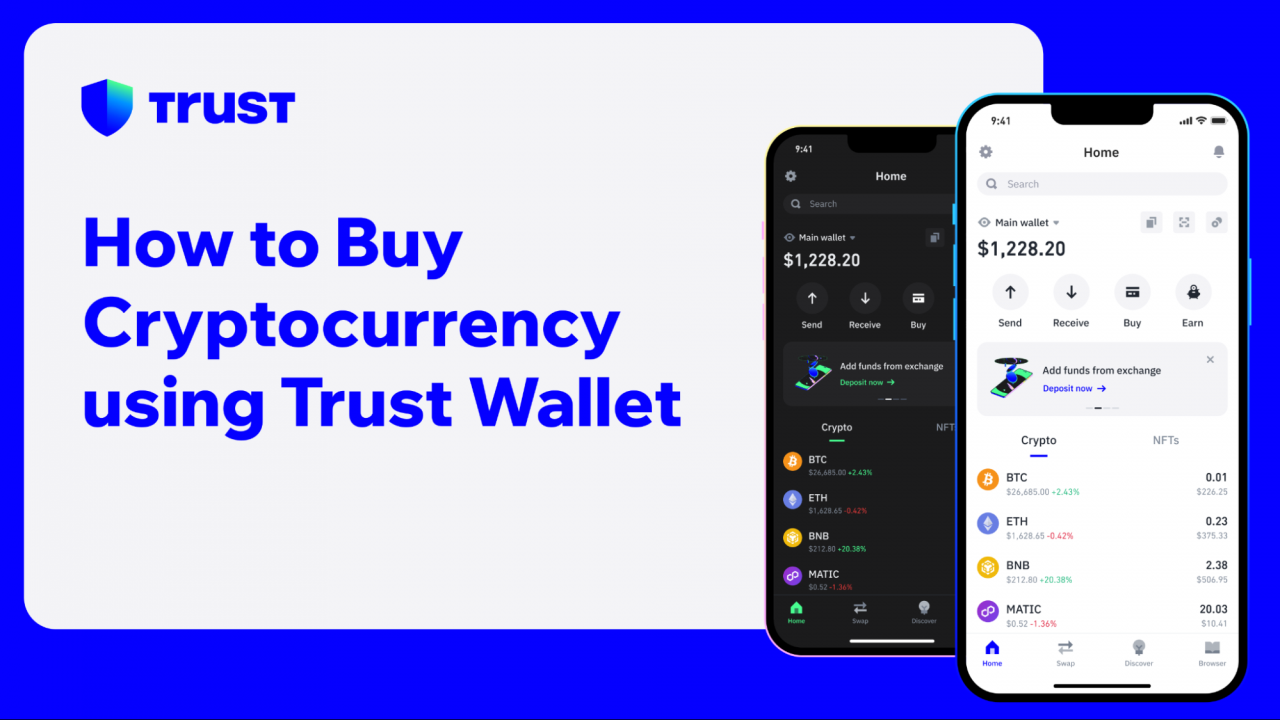
How to Buy Bitcoin Using Trust Wallet: A Visual Guide. | Trust

Navigating the cryptocurrency landscape, especially when making purchases, can present unexpected challenges. This section details potential issues encountered when buying Bitcoin with credit cards on Trust Wallet and provides actionable solutions and support avenues.Understanding potential roadblocks and having a plan for resolving them is crucial for a smooth and secure transaction experience.

Common Purchase Issues

Various factors can disrupt a Bitcoin purchase. These include insufficient funds in your credit card account, errors in inputting payment details, temporary network issues, or problems with Trust Wallet’s payment gateway. Addressing these promptly can minimize frustration.

  • Insufficient Funds: Ensure your credit card has sufficient available credit to cover the Bitcoin purchase amount. Verify your credit limit and available balance before initiating the transaction. Insufficient funds often result in payment failures.
  • Incorrect Payment Details: Double-check all entered payment details, including card number, expiry date, and CVV. Typos or inaccurate entries can lead to declined transactions. Carefully review and verify every detail before submission.
  • Network Issues: Bitcoin transactions rely on a global network. Temporary network congestion or outages can cause delays or failures. Waiting a short period and trying again is often helpful.
  • Trust Wallet Errors: If Trust Wallet encounters technical difficulties, it may display error messages during the purchase process. These errors can range from connection problems to server issues. Review the error message for guidance on resolution.

Resolving Transaction Problems

Troubleshooting involves several steps, from rechecking inputs to contacting support. A systematic approach to resolving problems is crucial.

  1. Verify Details: Double-check all entered payment information. Typos or discrepancies can lead to declined transactions. Carefully review your entered details and credit card information.
  2. Retry Transaction: If a network issue is suspected, wait a few minutes and retry the transaction. If the problem persists, proceed to other troubleshooting steps.
  3. Check Trust Wallet Updates: Ensure your Trust Wallet app is up-to-date. Outdated versions can sometimes cause compatibility issues. Update to the latest version available.
  4. Review Transaction History: Check your transaction history on Trust Wallet for any indications of the problem’s cause. The history often provides clues about the status of the transaction.

Support Resources and Contacting Support

Trust Wallet offers multiple avenues for support. Utilizing these resources can help expedite issue resolution.

  • Customer Support Forums: Trust Wallet often maintains forums or community discussion boards where users can find solutions to common issues. Check these resources for potential solutions.
  • Email Support: Most companies provide email support. Contact Trust Wallet’s support team through their official channels for more complex issues.
  • Live Chat Support: Some platforms offer live chat support for immediate assistance. This can be valuable for time-sensitive issues.
  • Social Media Channels: Follow Trust Wallet’s social media accounts for updates, announcements, and potential troubleshooting tips. Check social media channels for recent posts or updates.

Important Considerations

Maintaining a secure environment for your Bitcoin purchases is essential. Reviewing your transactions and understanding transaction fees is crucial.

  • Security Best Practices: Never share your login credentials or private keys with anyone. Protect your account information and follow recommended security practices for crypto wallets.
  • Transaction Fees: Be aware of transaction fees associated with Bitcoin purchases. These fees can vary based on network conditions and transaction volume. Review the fees before initiating the transaction.

Illustrative Examples

Navigating the process of purchasing Bitcoin with credit cards on Trust Wallet can sometimes present unique scenarios. These examples will illustrate successful transactions, potential pitfalls, and how to resolve them. Understanding these practical applications can significantly enhance your Bitcoin buying experience.Real-world examples of successful transactions and potential issues highlight the importance of careful consideration and adherence to security best practices.

These case studies will help you navigate the complexities of this process.

Successful Bitcoin Purchases

Successful Bitcoin purchases on Trust Wallet, using credit cards, often involve a straightforward process. Users typically initiate the purchase through the Trust Wallet app, selecting the desired amount of Bitcoin and the payment method. A confirmation from the payment gateway (like a credit card company) then completes the transaction.

Different Scenarios and Resolutions

Various scenarios can arise during Bitcoin purchases. For instance, if a transaction is declined, it is essential to review the transaction details and ensure the credit card information is accurate. Sometimes, the user may have insufficient funds or the card may have temporary limitations. Reaching out to the Trust Wallet support team or the payment gateway provider can provide further assistance in resolving the issue.

Using Different Purchase Methods

Trust Wallet offers multiple payment options for Bitcoin purchases, allowing users to select the method most convenient for them. These options may include credit cards, debit cards, bank transfers, or cryptocurrency exchanges. Users should carefully review the associated fees and terms before selecting a payment method.

Identifying Scams or Fraudulent Activities

Recognizing fraudulent activities is crucial when purchasing Bitcoin. Beware of websites or apps claiming to facilitate instant Bitcoin purchases at unusually high returns. Always verify the legitimacy of the platform by checking user reviews, verifying the security measures, and ensuring the platform is reputable. Legitimate platforms will usually have clear and transparent terms and conditions. If a platform requests unusual or excessive information, it’s a red flag.

Case Study: A Real-World Bitcoin Purchase

A user, named Alex, wanted to buy 1 Bitcoin using their Visa credit card on Trust Wallet. Alex initiated the purchase on the Trust Wallet app, entered their Visa credit card details, and selected the desired Bitcoin amount. The transaction went through smoothly, and the Bitcoin was credited to Alex’s Trust Wallet account within the specified timeframe. This case demonstrates a typical and successful Bitcoin purchase using credit cards on Trust Wallet.

Closing Notes

In conclusion, buying Bitcoin with a credit card on Trust Wallet is achievable, though it’s essential to prioritize security. This guide has provided a comprehensive overview of the process, including essential security measures, alternative methods, and considerations for choosing reliable platforms. Remember to thoroughly research platforms and understand transaction fees before proceeding.

FAQ Explained

What are the typical transaction fees for buying Bitcoin with a credit card on Trust Wallet?

Transaction fees vary depending on the platform you use. Some platforms charge a percentage of the transaction amount, while others may have a flat fee. It’s essential to check the platform’s terms and conditions for specific fee details before initiating a purchase.

What are some common scams or fraudulent activities related to Bitcoin purchases?

Be wary of unsolicited offers or emails promising high returns on your Bitcoin investments. Verify the legitimacy of any platform before entering your financial details. Scammers often mimic legitimate platforms, so always double-check the website’s URL and security certificates.

What are the different types of Bitcoin exchanges?

Bitcoin exchanges come in various forms, including centralized and decentralized exchanges. Centralized exchanges operate on a centralized platform, while decentralized exchanges operate on a peer-to-peer basis. The choice depends on your comfort level with different technologies and security measures.

What are some alternatives to buying Bitcoin with credit cards?

Alternatives include using bank transfers, peer-to-peer exchanges, or gift cards. Each method has its own advantages and disadvantages in terms of speed, cost, and security.

Bitcoin, a decentralized digital currency, has gained widespread adoption. Purchasing Bitcoin with credit cards has become increasingly popular, offering a convenient method for acquiring this digital asset. This guide explores the process of buying Bitcoin instantly with credit cards, highlighting both the benefits and potential risks.

The process, while straightforward for many, involves several considerations. Different platforms offer varying transaction speeds and fees, and understanding these nuances is crucial for a smooth and secure transaction. This comprehensive guide will illuminate these aspects, providing insights into choosing the right platform and mitigating potential pitfalls.

Introduction to Bitcoin Purchases

Bitcoin is a decentralized digital currency, operating independently of central banks and governments. Its value is determined by market forces, making it susceptible to fluctuations. Unlike traditional currencies, Bitcoin transactions are recorded on a public ledger called a blockchain, enhancing transparency and security. This decentralized nature contributes to its unique characteristics.Bitcoin purchases are made through various methods, ranging from established exchanges to peer-to-peer (P2P) platforms.

The choice of method often depends on factors such as desired transaction speed, fees, and security concerns. The availability of instant transactions is a key consideration for many users.

Bitcoin Purchase Methods

Several avenues are available for acquiring Bitcoin. Understanding the different methods is crucial for choosing the best approach. Each method presents its own trade-offs regarding transaction speed and cost.

  • Exchanges: Centralized platforms like Coinbase, Kraken, and Gemini allow users to buy and sell Bitcoin using traditional payment methods like bank transfers or credit cards. They offer a wide range of features, including user support and security measures. However, transaction speed varies based on factors such as network congestion and platform policies.
  • P2P Platforms: Peer-to-peer platforms connect buyers and sellers directly, enabling instant transactions. Platforms like LocalBitcoins and Paxful facilitate direct transactions between users, bypassing intermediaries. This direct approach often leads to faster transaction times compared to exchanges, but it also carries a higher degree of risk due to the absence of a central authority.
  • Bitcoin ATMs: Physical ATMs allow users to buy and sell Bitcoin using cash. These machines are widely available in many regions and provide a convenient option for cash-based transactions. While the process is generally quick, transaction fees and availability can vary.

Comparison of Bitcoin Purchase Methods

The table below summarizes the key characteristics of different Bitcoin purchase methods, emphasizing the aspect of transaction speed.

Method Speed Security Fees Ease of Use
Exchanges Variable (depends on network and exchange policy) Generally high Variable (platform and transaction type dependent) High
P2P Platforms Potentially instant Lower (no central authority) Variable (negotiated between users) Moderate
Bitcoin ATMs Generally fast Moderate Variable (machine and transaction dependent) Low

Note: Transaction speed can fluctuate based on various factors, including network congestion, transaction volume, and platform policies.

Instant Bitcoin Transactions

The concept of “instant” Bitcoin transactions is often relative. While some platforms claim instant transactions, the actual time it takes for the Bitcoin to reflect in your wallet can vary depending on the underlying blockchain confirmation process. P2P platforms, for example, frequently offer nearly instant transactions, but exchanges might experience delays due to the processing times of payment networks.

Buying Bitcoin with Credit Cards

Bitcoin purchases using credit cards have become increasingly popular, offering a convenient way to acquire the cryptocurrency. This method, however, involves various considerations, including platform choices, fees, security measures, and compatibility with different credit cards. Understanding these aspects allows users to make informed decisions and complete transactions safely and efficiently.Several platforms facilitate Bitcoin purchases with credit cards, each employing unique methods and standards.

Comparing these platforms, analyzing their associated fees and transaction times, and assessing security protocols are crucial to selecting the best option for individual needs. This section will delve into these aspects to provide a comprehensive understanding of the process.

Available Platforms for Bitcoin Purchases

Various online platforms facilitate Bitcoin purchases using credit cards. These platforms often provide user-friendly interfaces and secure transaction environments. Examples include Coinbase, Gemini, and various cryptocurrency exchanges. Choosing the right platform depends on factors such as user experience, transaction fees, and security measures.

Fees and Transaction Times

Different platforms charge varying fees for Bitcoin purchases using credit cards. These fees can include transaction fees, processing fees, and potentially other charges. Transaction times also vary across platforms, influenced by factors such as network congestion and platform processing speeds. Some platforms may offer faster transaction speeds at a higher cost.

Security Measures

Security is paramount when dealing with cryptocurrency. Reputable platforms employ robust security measures to protect user data and funds. These measures may include encryption protocols, two-factor authentication, and rigorous fraud detection systems. It’s essential to choose platforms with strong security measures to minimize risks.

Compatible Credit Cards

Not all credit cards are compatible with Bitcoin purchases. Some platforms may accept specific credit cards or types of credit cards, or may have certain restrictions. Users should verify compatibility with the chosen platform before initiating a transaction.

Steps for Completing a Bitcoin Purchase

The process for completing a Bitcoin purchase using a credit card generally involves these steps:

  • Register on the chosen Bitcoin platform and verify user account details.
  • Select the desired amount of Bitcoin to purchase.
  • Enter credit card information and confirm the transaction.
  • The platform processes the transaction and displays the purchase confirmation.
  • The Bitcoin will be credited to the user’s account once the transaction is finalized.

Platform Comparison Table

The table below summarizes the pros and cons of popular platforms for instant Bitcoin purchases with credit cards. Factors like fees, transaction speeds, and security are considered to help users make informed decisions.

Platform Pros Cons
Coinbase Widely recognized, user-friendly interface, strong security measures Potentially higher fees compared to other platforms
Gemini Strong security record, good customer support, user-friendly interface May have limited credit card options
Kraken Competitive fees, wide range of cryptocurrencies, excellent security Steeper learning curve for some users
Binance Extremely low fees, huge selection of cryptocurrencies, high trading volume Potentially higher security risks compared to other established platforms.

Instant Bitcoin Purchase Considerations

Instant Bitcoin purchases, while convenient, come with inherent risks. Users should be aware of the potential for scams, high fees, and security vulnerabilities associated with these rapid transactions. Thorough due diligence is crucial when selecting a platform for such purchases.

Risks Associated with Instant Bitcoin Purchases

Instant Bitcoin purchases, while appealing for their speed, can expose users to significant risks. These risks stem from the inherent nature of the cryptocurrency market and the need for extreme caution in this realm. The rapid transaction nature can make it harder to identify and rectify issues, as well as significantly impact the user’s funds.

Potential for Scams and Fraudulent Activities

The allure of instant transactions can unfortunately attract fraudulent actors. Numerous scams target unsuspecting users seeking quick Bitcoin access. These scams often involve fake platforms or manipulated websites designed to steal sensitive information and funds. Users must be vigilant in scrutinizing the platform’s legitimacy before making any transactions.

Verifying the Legitimacy of Platforms

Before engaging in instant Bitcoin purchases, users should verify the platform’s legitimacy. This involves checking for valid licensing, regulatory compliance, and user reviews. A strong reputation and positive user feedback are important indicators of a trustworthy platform. Verify the platform’s presence on reputable online directories or community forums. Research any known security breaches or controversies associated with the platform.

Security Protocols to Look For

Secure platforms typically implement robust security protocols to protect user funds. Look for platforms that utilize industry-standard encryption technologies, such as SSL certificates, to safeguard data transmission. Verify if the platform employs multi-factor authentication (MFA) to enhance account security. A clear privacy policy outlining how user data is handled is also a crucial indicator of a responsible platform.

Seek platforms that offer secure payment gateways, such as verified payment processors.

Potential for High Fees or Penalties

Instant Bitcoin purchase methods often come with higher transaction fees compared to traditional methods. These fees can be significant, especially during periods of high demand or network congestion. Some platforms may also impose penalties for specific types of transactions, such as those involving large sums or high-risk activities. Be sure to thoroughly review all fees and potential penalties before proceeding with any transaction.

Key Factors for Choosing a Platform

Factor Description Importance
Platform Reputation Look for platforms with a strong track record and positive user reviews. Crucial for assessing trustworthiness.
Security Protocols Verify encryption, MFA, and secure payment gateways. Essential for protecting funds.
Transaction Fees Understand and compare fees associated with different platforms. Impacts the overall cost of the purchase.
Regulatory Compliance Check for valid licenses and adherence to regulations. Reduces risk of fraud and ensures compliance.
User Reviews and Feedback Examine reviews from other users for insights and potential red flags. Provides valuable feedback on platform reliability.

Alternatives to Instant Bitcoin Purchases

While instant Bitcoin purchases with credit cards offer convenience, they often come with higher fees and potentially less security. Exploring alternative methods can provide greater control over the transaction process and potentially lower costs. This section will detail several options for acquiring Bitcoin without the need for immediate confirmation.

Slower, Lower-Cost Methods

Several exchanges and platforms facilitate Bitcoin purchases outside of the instant processing model. These methods often involve a wait period for the transaction to complete, but they typically offer lower fees. Choosing a method that aligns with your risk tolerance and desired timeframe is essential.

  • Bank Transfers: Many reputable cryptocurrency exchanges allow users to fund their accounts using bank transfers. This process is generally slower than instant transactions, taking anywhere from a few hours to several business days, depending on the bank and exchange. The security of this method is usually high, as the funds are transferred through established banking channels. The cost associated with this method is typically lower than credit card purchases, often just the exchange platform’s standard fees.

  • Debit Card Purchases (Non-Instant): Some exchanges support debit card transactions, but these may not offer instant processing. This alternative offers a faster alternative to bank transfers while potentially maintaining a lower fee than credit card transactions. The speed of the process is variable and depends on the exchange’s processing time and the specific debit card used. Security is similar to bank transfers, relying on the exchange’s security measures.

Peer-to-Peer (P2P) Transactions

Peer-to-peer (P2P) Bitcoin trading platforms connect buyers and sellers directly. This method provides flexibility in transaction terms, potentially offering lower fees than traditional exchanges. However, it also introduces a greater level of risk due to the direct interaction between parties.

  • Finding Trustworthy P2P Platforms: Thorough research and due diligence are crucial when choosing a P2P platform. Look for platforms with robust security measures, user reviews, and established reputations. Read reviews, check the platform’s history, and examine the security features. A reputable platform typically includes measures to protect users from fraud and scams. Platforms like LocalBitcoins or Paxful can be utilized for finding reputable buyers and sellers.

  • Benefits of P2P Transactions: P2P transactions often offer lower fees than traditional exchanges. They can facilitate transactions with more flexibility in terms of payment methods and price negotiation. A P2P approach allows direct interaction between buyer and seller, allowing for customized terms. The speed of transactions can vary widely depending on the agreed-upon terms and the availability of both parties.

    The security of P2P transactions depends heavily on the due diligence of the buyer and seller, so understanding the platform’s security measures and using caution are paramount.

  • Risks Associated with P2P Transactions: Direct interaction between parties introduces the risk of scams and fraud. Verify the identity of the seller thoroughly, and avoid platforms that do not have verification procedures. Ensure that you are comfortable with the payment terms and the agreed-upon methods. Buyer protection policies, when offered by the platform, provide an additional layer of security, but they may not always be foolproof.

    Conducting transactions through reputable platforms significantly mitigates risks.

Comparison Table: Alternative Bitcoin Purchase Methods

Method Speed Cost Security
Bank Transfer Slow (hours to days) Low High
Debit Card (Non-Instant) Variable (faster than bank transfer) Potentially low Medium to High
P2P Transactions Variable (negotiable) Potentially low Medium to Low (depending on platform and due diligence)

Buy Bitcoin – General Information

Bitcoin, a decentralized digital currency, has revolutionized how people think about money. Its emergence from the blockchain technology landscape has introduced new possibilities for financial transactions and investment. Understanding its history, use cases, and acquisition methods is crucial for anyone considering engaging with this innovative asset.Bitcoin’s history began with a whitepaper published in 2008, outlining a peer-to-peer electronic cash system.

This system aimed to eliminate intermediaries like banks, fostering financial inclusion and transparency. Its decentralized nature, resistant to censorship, has captivated individuals and institutions alike, leading to a burgeoning market and significant price fluctuations.

Bitcoin History and Use Cases

Bitcoin’s development stemmed from the desire for a secure, transparent, and decentralized digital currency. Its innovative approach challenged traditional financial systems, attracting interest from investors and entrepreneurs. Early adopters recognized its potential as a store of value and a medium of exchange, though its volatile price and regulatory uncertainties remain factors. Today, Bitcoin is used for a range of purposes, including online transactions, investments, and even as a hedge against inflation.

Methods for Acquiring Bitcoin

Acquiring Bitcoin can be achieved through various methods, each with its own set of advantages and disadvantages. Direct purchase from exchanges is a common method, often involving a verification process and potentially higher transaction fees. Other options include peer-to-peer (P2P) exchanges, which facilitate transactions between individuals, or over-the-counter (OTC) markets, offering more personalized service but potentially carrying greater risks.

Cryptocurrency ATMs, while convenient, typically have higher transaction fees.

Bitcoin Wallets and Their Importance

Bitcoin wallets serve as digital repositories for storing Bitcoin. They are essential for managing and accessing your Bitcoin holdings. Different wallet types offer varying levels of security and functionality, playing a crucial role in ensuring your Bitcoin remains safe and accessible.

Factors to Consider When Choosing a Bitcoin Wallet

Several factors influence the selection of a Bitcoin wallet. Security measures, ease of use, and compatibility with various devices are key considerations. Features like multi-factor authentication and hardware security modules (HSMs) significantly enhance security, while mobile wallets offer convenience for on-the-go access. The type of wallet (software, hardware, or online) also influences the level of security and control you have over your funds.

Secure Storage Practices for Bitcoin

Secure storage practices are paramount for protecting your Bitcoin holdings. Storing your private keys offline is a critical measure. Utilizing strong passwords, enabling two-factor authentication, and regularly reviewing wallet security settings are all important steps. Understanding the vulnerabilities associated with various wallet types and implementing appropriate security measures are crucial to mitigate risks.

Different Types of Bitcoin Wallets

Choosing the right Bitcoin wallet depends on your needs and comfort level. Different wallet types cater to various preferences.

Wallet Type Key Features Security Considerations
Software Wallets User-friendly interfaces, compatibility with various devices. Security relies on strong passwords and two-factor authentication. Vulnerable to malware if not properly secured.
Hardware Wallets Offline storage of private keys, enhanced security. Generally more secure, but potentially more expensive.
Online Wallets Convenience of online access. Security depends on the platform’s security measures and user practices. Exposure to platform vulnerabilities.

Illustrative Examples

Buy Bitcoin with Credit Card | The Old Hag

Buying Bitcoin with credit cards can be appealing due to its perceived speed, but it’s crucial to understand the associated complexities, potential risks, and alternatives. This section provides practical examples to help you make informed decisions.

Fictional Scenario: A Bitcoin Purchase

Imagine Sarah wants to buy 1 Bitcoin. She uses a popular online exchange that supports credit card purchases. The platform charges a 2.5% fee, plus a 0.5% network fee. This adds up to a total transaction cost of approximately $50. The process is relatively quick, completing within 15-20 minutes.

However, Sarah’s credit card issuer might flag the transaction due to its novelty, potentially requiring further verification. This could delay the purchase or even result in the transaction being rejected.

Case Study: Risks of Instant Bitcoin Purchases

A recent case study highlights the risks associated with instant Bitcoin purchases. A user purchased Bitcoin with a credit card on a platform with questionable security practices. The platform later experienced a security breach, exposing user data and potentially jeopardizing the user’s funds. While the user’s Bitcoin wasn’t directly compromised in this instance, the incident underscored the importance of choosing reputable platforms and understanding the risks involved in instant transactions.

Comparison of Bitcoin Purchase Methods

Different methods for acquiring Bitcoin have varying implications for fees and transaction speed. Consider a scenario where you need 0.5 Bitcoin. Purchasing through a peer-to-peer (P2P) platform could involve direct negotiations with a seller, potentially leading to lower fees compared to exchanges. However, this could take more time to complete. Using an exchange with a credit card often involves higher fees but is typically faster.

A bank transfer is generally the slowest method, but it may be free or have negligible fees.

Secure Bitcoin Wallet Interface

A secure Bitcoin wallet interface should present a clean and user-friendly layout. The address for receiving Bitcoin should be clearly displayed and easily copyable. Security measures like two-factor authentication (2FA) should be prominently featured and easily enabled. The wallet should clearly show transaction history, including dates, amounts, and addresses. A prominent warning against sharing sensitive information should be visible on the screen.

Visual cues like encryption keys and secure connection symbols should reinforce the security of the platform.

P2P Bitcoin Purchase Scenario

Using a P2P platform for buying Bitcoin involves directly connecting with a seller. The seller will specify the price and payment method, often using a platform’s escrow service to facilitate the transaction. A buyer might use a P2P platform like LocalBitcoins or Paxful to purchase Bitcoin from a local seller. This approach can offer lower fees compared to traditional exchanges, but it involves a greater degree of risk if the seller is untrustworthy or if the platform’s escrow service is unreliable.

Flowchart: Bitcoin Purchase with Credit Card (Example Platform)

A flowchart illustrating the process of buying Bitcoin with a credit card on a specific platform (e.g., Coinbase) would show the following steps:

  • User logs in to the platform.
  • User navigates to the Bitcoin purchase page.
  • User inputs the desired amount of Bitcoin.
  • User selects credit card as payment method.
  • User confirms the transaction details.
  • Credit card payment is processed.
  • Bitcoin is credited to the user’s wallet.

Concluding Remarks

In conclusion, buying Bitcoin with credit cards instantly can be a quick and convenient method for acquiring Bitcoin. However, users must thoroughly research platforms, understand associated fees and risks, and prioritize security measures to avoid potential pitfalls. Exploring alternative methods, such as peer-to-peer exchanges, may also offer attractive alternatives, balancing speed, cost, and security.

Popular Questions

What are the typical fees associated with instant Bitcoin purchases using credit cards?

Fees vary significantly by platform. Some platforms charge a percentage of the transaction, while others may impose a flat fee. It’s essential to review the specific fees of each platform before making a purchase.

What security measures should I look for when choosing a platform for instant Bitcoin purchases?

Look for platforms with robust security measures, such as two-factor authentication, secure payment gateways, and clear privacy policies. Verify the platform’s legitimacy and reputation by checking reviews and user feedback.

Are there any alternative methods for acquiring Bitcoin that don’t involve instant transactions?

Yes, peer-to-peer (P2P) exchanges and traditional exchanges are viable alternatives. These methods may have different transaction speeds and costs, and involve varying degrees of risk and security measures. Thorough research is essential.

How can I verify the legitimacy of a platform offering instant Bitcoin purchases?

Research the platform thoroughly. Check reviews and testimonials from other users. Look for reputable licensing or regulatory approvals. Be wary of platforms with unrealistic promises or vague information.

Navigating the world of cryptocurrency can feel daunting, but buying Bitcoin and securely transferring it to your wallet doesn’t have to be. This guide breaks down the process, from understanding Bitcoin wallets to choosing secure platforms for purchase. We’ll explore various methods, highlighting their pros and cons to help you make informed decisions.

Whether you’re a seasoned investor or a complete beginner, this comprehensive guide provides a clear and concise overview of the steps involved in acquiring and transferring Bitcoin to your chosen wallet. We cover everything from setting up your Bitcoin wallet to using different exchange platforms, all while emphasizing the importance of security.

Introduction to Bitcoin Wallet Purchases

Bitcoin, a decentralized digital currency, emerged in 2009, challenging traditional financial systems. Its creation, attributed to Satoshi Nakamoto (a pseudonym), revolutionized the concept of peer-to-peer transactions, removing the need for intermediaries like banks. This innovation quickly gained traction, leading to significant growth and volatility in the cryptocurrency market.Understanding Bitcoin wallets is crucial for managing and accessing your digital holdings.

These digital repositories store your private keys, which are essential for controlling your Bitcoin. Different types of wallets cater to various needs and security preferences, ranging from simple mobile apps to more complex software solutions. This exploration will illuminate the process of purchasing Bitcoin and the various methods available.

Bitcoin Wallets and Their Types

Bitcoin wallets are digital repositories that securely store your Bitcoin. They act as your online account, enabling you to send, receive, and manage your cryptocurrency. Various wallet types exist, each with its own set of characteristics:

  • Desktop Wallets: These wallets run on your computer, offering greater control and security. They often feature advanced functionalities and are known for robust security measures, but may require more technical expertise to set up and use.
  • Mobile Wallets: Designed for ease of use on smartphones, these wallets provide convenient access to your Bitcoin on the go. They typically have user-friendly interfaces, but may have slightly less control and security compared to desktop wallets.
  • Hardware Wallets: These are physical devices specifically designed for secure Bitcoin storage. They provide an additional layer of security by storing your private keys offline, protecting them from online threats. They often require a learning curve to understand their functionalities but are considered the most secure option.
  • Web Wallets: These wallets operate entirely on a web browser, providing quick access to Bitcoin without the need for downloads or installations. They are easy to use but are often less secure due to their online nature.

Creating a Bitcoin Wallet

Creating a Bitcoin wallet involves several steps, which can vary based on the chosen wallet type. Generally, these steps include:

  1. Choosing a Wallet: Select a wallet type that aligns with your needs and technical comfort level.
  2. Downloading/Installation: Download the appropriate software for your chosen wallet type (desktop, mobile, hardware). Follow the installation instructions carefully.
  3. Creating an Account: Enter necessary details and create a unique username and password, or use existing accounts depending on the wallet.
  4. Generating Keys: The wallet will generate your private and public keys. These keys are crucial for managing your Bitcoin. Carefully store and manage your private keys, as they grant access to your funds.
  5. Verifying Your Wallet: Take necessary steps to verify the authenticity of your wallet to prevent unauthorized access.

Reasons for Buying Bitcoin

Individuals may acquire Bitcoin for a variety of reasons, often influenced by market trends and investment strategies. Some common motivations include:

  • Investment Opportunities: Bitcoin’s price volatility presents both risks and rewards, attracting investors seeking potential gains.
  • Financial Freedom: Bitcoin transactions can be conducted without intermediaries, potentially offering more autonomy and control over financial resources.
  • Hedge Against Inflation: Some see Bitcoin as a hedge against inflation, believing its scarcity and limited supply could maintain or increase its value over time.
  • Decentralized Transactions: The elimination of intermediaries in transactions fosters a more accessible and potentially cheaper financial system for some users.

Methods for Purchasing Bitcoin

Purchasing Bitcoin involves various methods, each with its own set of advantages and disadvantages.

Method Description Pros Cons
Exchange Platforms Platforms like Coinbase, Kraken, and Gemini allow users to buy Bitcoin using traditional payment methods like bank transfers or credit cards. Widely available, user-friendly, and often have low fees. Potential for security risks, regulation differences may exist across jurisdictions, and transactions may be subject to certain timeframes.
Over-the-Counter (OTC) Markets Direct transactions with other users or brokers, often used for larger purchases or for avoiding fees. Potential for lower fees, more personalized service. Requires greater due diligence, higher risk of fraud, and may involve higher transaction times.
Bitcoin ATMs Physical machines that allow users to buy or sell Bitcoin using cash. Convenience for cash-based transactions. Limited availability, potentially higher fees, and may be subject to regional regulations.
Peer-to-Peer (P2P) Platforms Platforms connecting buyers and sellers directly, allowing for direct exchange without an intermediary. Potentially lower fees and greater control. Higher risk of fraud or scams, due diligence is crucial.

Exploring Bitcoin Purchase Platforms

Buying Bitcoin involves choosing a reputable platform. Selecting the right exchange is crucial for a smooth and secure transaction. Different platforms offer varying levels of service, fees, and security measures. Understanding these nuances allows for informed decisions and a positive experience.

Popular Bitcoin Exchange Platforms

Various platforms facilitate Bitcoin purchases. Some are more user-friendly, while others specialize in specific features. Popularity and user base are not always indicative of reliability. Due to the ever-evolving nature of the cryptocurrency market, ongoing research is crucial to maintain awareness of the latest developments.

Comparison of Bitcoin Exchange Platforms

A comparative analysis of key features is vital for evaluating platforms. This involves scrutinizing fees, security protocols, and user experience. Different exchanges cater to diverse user needs, from beginners to experienced traders.

Bitcoin Exchange Comparison Table

This table provides a concise overview of popular exchanges. Factors considered include fees, security ratings, and user reviews. Note that security ratings are often third-party assessments. User reviews can vary based on individual experiences.

Exchange Name Fees Security Ratings User Reviews
Coinbase Variable, often tiered High, known for robust security measures Generally positive, with some complaints about fees
Kraken Variable, often tiered High, known for robust security measures Positive, often praised for advanced trading tools
Binance Variable, often tiered, potentially lower than competitors High, known for robust security measures, though controversies exist Mixed, praised for its vast features and lower fees but also criticized for its complexity and potential risks
Gemini Variable, often tiered High, known for robust security measures Generally positive, with good customer support
Bitstamp Variable, often tiered High, known for robust security measures Positive, with focus on reliability and security

Security Measures Used by Exchanges

Exchanges employ various security measures to safeguard user funds. These include multi-factor authentication (MFA), cold storage, and advanced encryption. Cold storage involves storing a portion of funds offline, mitigating risks associated with online hacks. The complexity of these security protocols varies across platforms. Understanding these measures is essential for making informed decisions.

Not all exchanges employ the same security protocols, and their effectiveness can differ. Security is a multifaceted aspect, and the presence of robust security measures doesn’t guarantee absolute protection.

“Security is paramount in the cryptocurrency world. Robust security protocols are essential to protect users’ assets.”

Buying Bitcoin for a Wallet

How Much Does Cost to Create a Bitcoin Wallet App?

Acquiring Bitcoin and securely storing it in a digital wallet involves a few key steps. Understanding these processes ensures a smooth and safe experience. This section details the process of buying Bitcoin from a platform and transferring it to your chosen wallet.

Bitcoin Purchase Process from a Platform

The process of buying Bitcoin from a platform typically involves creating an account, verifying your identity, funding your account with a payment method, and then placing an order to purchase Bitcoin. Different platforms may have slightly varying procedures, but the fundamental steps remain consistent. After confirming your order, the platform will typically process the transaction and reflect the Bitcoin balance in your account.

Bitcoin Transfer to a Wallet

Once you have Bitcoin in your exchange account, you need to transfer it to your wallet. This transfer process is crucial for gaining control over your Bitcoin holdings. The exact method varies depending on the exchange and wallet types. Following the exchange’s instructions carefully is essential for a successful transfer.

Methods for Transferring Bitcoin from an Exchange to a Wallet

Various methods facilitate the transfer of Bitcoin from an exchange to a wallet. These methods vary in their security considerations and convenience. Understanding these options allows users to select the most appropriate method for their needs.

Wallet Types and Transfer Methods

Different types of wallets offer varying levels of security and accessibility. The transfer method will depend on the wallet type.

Method Description Security Considerations
Bitcoin Network Transfer A direct transfer of Bitcoin from the exchange’s blockchain address to your wallet’s address. This typically involves generating a unique receiving address on your wallet. Relatively secure if done correctly, but subject to network confirmation times. The security depends heavily on the accuracy of the wallet address.
Exchange’s Internal Transfer (if supported) Some exchanges allow internal transfers between different accounts, including wallets. This might be a faster alternative. Security is tied to the exchange’s security measures, and the transfer might be subject to the exchange’s internal policies.
Custodial Wallet Transfers (e.g., using a specific exchange-provided wallet) The exchange provides a specific wallet address for the transfer, often integrated into their platform. Security depends on the exchange’s security protocols. Security is limited to the extent of the exchange’s protections.
Non-Custodial Wallet Transfers (e.g., using a software or hardware wallet) Involves generating a unique receiving address on your chosen wallet, which is then provided to the exchange. The exchange will send the Bitcoin to that address. Generally considered more secure because you have direct control over your private keys. Security is highly dependent on the wallet and user’s practices.

Example: Transferring Bitcoin from Coinbase to a Ledger Nano S Hardware Wallet

A user with Bitcoin on Coinbase could initiate a transfer to their Ledger Nano S hardware wallet. This would typically involve generating a unique receiving address on the Ledger. The user would provide this address to Coinbase for the transfer.

Security Considerations

Protecting your Bitcoin holdings is paramount. Careless transactions and inadequate security measures can lead to significant financial losses. Understanding the potential risks and implementing robust security protocols is crucial for safeguarding your digital assets.Bitcoin transactions, while decentralized, are not inherently immune to risks. The digital nature of Bitcoin necessitates a proactive approach to security, similar to safeguarding physical valuables.

By understanding the vulnerabilities and employing appropriate strategies, you can mitigate these risks and maintain the integrity of your Bitcoin holdings.

Importance of Secure Bitcoin Transactions

Secure Bitcoin transactions are essential to prevent unauthorized access and financial loss. A compromised transaction can result in the irreversible loss of your Bitcoin. This is analogous to losing physical cash; the loss is permanent and irretrievable.

Common Security Risks

Several risks are associated with buying and storing Bitcoin. These risks stem from both external threats and internal vulnerabilities.

  • Phishing and Malware Attacks: Phishing scams and malicious software are common threats. Cybercriminals attempt to deceive users into revealing their login credentials or installing malware to steal Bitcoin. Sophisticated phishing emails and websites can mimic legitimate platforms, making it difficult for individuals to distinguish between genuine and fraudulent sites.
  • Compromised Wallets: If your Bitcoin wallet is compromised, hackers can gain access to your funds. This can happen through malware infections, weak passwords, or vulnerabilities in the wallet software. Protecting your wallet software and ensuring strong passwords is essential to prevent such compromises.
  • Exchange Security Breaches: Bitcoin exchanges, platforms facilitating the buying and selling of Bitcoin, are potential targets for hackers. A security breach on an exchange can result in the loss of customer funds. Exchanges are continuously under attack, so robust security measures and insurance policies are vital for protecting user assets.

Potential Scams and Fraudulent Activities

Various scams and fraudulent activities target Bitcoin users. Awareness of these tactics is crucial for avoiding financial losses.

  • Fake Exchanges and Platforms: Fake Bitcoin exchanges and investment platforms lure users with promises of high returns. These scams often lead to the complete loss of invested funds.
  • Pump-and-Dump Schemes: Pump-and-dump schemes manipulate Bitcoin prices artificially. These schemes involve artificially inflating the price of Bitcoin, then quickly selling their holdings, leading to losses for unsuspecting investors.
  • Investment Scams: Fraudulent investment schemes targeting Bitcoin investors often promise unrealistic returns. These scams usually involve fabricated success stories and inflated claims.

Importance of Strong Passwords and Two-Factor Authentication

Robust password security and two-factor authentication are crucial for protecting your Bitcoin accounts.

  • Strong Passwords: Strong passwords are essential to prevent unauthorized access to your Bitcoin accounts. These passwords should be unique and complex, combining uppercase and lowercase letters, numbers, and symbols.
  • Two-Factor Authentication (2FA): 2FA adds an extra layer of security by requiring a second verification method, such as a code from a mobile app or a security token, in addition to your password. This significantly enhances account protection against unauthorized access attempts.

Need for Cold Storage Wallets

Cold storage wallets are recommended for storing Bitcoin. These wallets are offline and not connected to the internet, making them significantly less susceptible to online attacks.

  • Offline Security: Cold storage wallets are disconnected from the internet, reducing the risk of online hacking and malware infections. The physical separation from online networks enhances security significantly.
  • Enhanced Security: Cold storage wallets are considered a more secure method for storing Bitcoin compared to online wallets, reducing the potential for unauthorized access.

Related Information on Buying Bitcoin

Understanding the market dynamics surrounding Bitcoin is crucial for informed investment decisions. This section delves into the complexities of Bitcoin’s price movements, market trends, and the regulatory environment that shapes its trajectory. Knowing these factors can help you navigate the potential risks and rewards associated with buying Bitcoin.

Market Trends in Bitcoin

Bitcoin’s market trajectory has been characterized by periods of significant growth and contraction. Historically, the market has exhibited a pattern of bull runs (periods of increasing prices) followed by bear markets (periods of decreasing prices). These cycles are influenced by various factors, including technological advancements, regulatory changes, and overall market sentiment. Observing past trends can offer insight into potential future price movements, but it’s crucial to remember that past performance is not indicative of future results.

Bitcoin’s Volatility

Bitcoin’s price is notoriously volatile, meaning its value fluctuates significantly over short periods. This volatility is a defining characteristic of the cryptocurrency market. While some periods see substantial price increases, others experience dramatic declines. This inherent volatility requires careful consideration of risk tolerance when engaging in Bitcoin investments.

Bitcoin Price Fluctuations

Bitcoin’s price fluctuations are a complex phenomenon influenced by numerous factors. These fluctuations are often unpredictable, making precise forecasting challenging. Factors such as market sentiment, news events, and regulatory changes can all contribute to price swings. Understanding these factors can help investors make more informed decisions, but it’s important to remember that price predictions are not guaranteed.

Factors Influencing Bitcoin’s Price

Several factors contribute to Bitcoin’s price fluctuations. Technological advancements, particularly in blockchain technology and related applications, can influence market sentiment and consequently, price. News events, both positive and negative, can create volatility. Regulatory developments, particularly those impacting cryptocurrency markets, often significantly impact Bitcoin’s price. Global economic conditions and market sentiment also play a crucial role in determining Bitcoin’s price.

It is important to consider these factors comprehensively to form a complete understanding of Bitcoin’s price movements.

Regulatory Landscape Surrounding Bitcoin

The regulatory landscape surrounding Bitcoin is constantly evolving and varies significantly across jurisdictions. Different countries and regions have adopted varying approaches to regulating cryptocurrencies. Some have implemented strict regulations, while others have remained more permissive. These differences in regulatory frameworks can create significant variations in market conditions and investment opportunities across various geographic locations. Investors should be aware of the regulatory climate in their specific region when considering Bitcoin investments.

Illustrative Examples of Bitcoin Transactions

Buying and transferring Bitcoin involves several steps, from initiating a purchase on a cryptocurrency exchange to securely storing it in a digital wallet. This section provides real-world examples to clarify the process and highlights potential security considerations.

Illustrative Example: Buying Bitcoin from Coinbase and Transferring to a Ledger Wallet

This example demonstrates the typical process of purchasing Bitcoin from a reputable exchange and transferring it to a hardware wallet. A user, let’s call them “Alice,” wants to acquire Bitcoin.

  • Alice creates an account on Coinbase, a popular cryptocurrency exchange. She completes the verification process, providing necessary identification documents.
  • She deposits funds into her Coinbase account using a bank transfer. This deposit is typically processed instantly or within a few business days depending on the bank and exchange’s policy.
  • Alice then uses the funds in her Coinbase account to buy Bitcoin. She specifies the amount of Bitcoin she wishes to purchase and the transaction is executed on the Coinbase platform.
  • After the successful Bitcoin purchase, Alice downloads and sets up a Ledger Nano S, a secure hardware wallet. This wallet acts as a secure offline storage for her Bitcoin.
  • Coinbase provides Alice with a Bitcoin address to send the purchased Bitcoin to. She carefully copies and pastes this address into her Ledger wallet’s transaction input. A secure method of transferring Bitcoin is critical here, avoiding any human error or manipulation.
  • Alice initiates the transaction from her Coinbase account to the Bitcoin address in her Ledger wallet. The transaction is confirmed on the Bitcoin blockchain, and Alice’s Ledger wallet receives the Bitcoin.

Successful Transaction Using a Specific Exchange and Wallet Type

Using Coinbase and a Ledger Nano S wallet exemplifies a successful and secure transaction. The Ledger provides a secure offline environment for storing private keys, reducing the risk of hacking or theft. The Coinbase platform, with its robust security measures, facilitates the initial purchase. Transaction confirmation on the blockchain is a critical part of this process.

Secure Transfer Method and Security Protocols

Using a hardware wallet like Ledger ensures the security of private keys. These keys are never stored online, greatly minimizing the risk of hacking. Coinbase employs two-factor authentication (2FA) and other security measures to protect user accounts.

Flow Chart of Bitcoin Buying and Transferring

Step Action
1 Create Coinbase account and verify identity
2 Deposit funds into Coinbase account
3 Purchase Bitcoin using funds
4 Download and set up Ledger wallet
5 Obtain Bitcoin address from Coinbase
6 Transfer Bitcoin from Coinbase to Ledger
7 Confirm transaction on blockchain

Scenario: User Encountering a Security Risk

A user, “Bob,” attempts to buy Bitcoin on a newly launched exchange, “FastBit,” without proper due diligence. FastBit lacks robust security measures. Bob unknowingly uses a weak password and is a victim of a phishing attack. Consequently, his funds are stolen. This scenario highlights the importance of choosing reputable exchanges and adhering to strong security practices.

Different Bitcoin Wallet Types

Bitcoin wallets are essential for storing and managing your Bitcoin holdings. Understanding the various types available is crucial for selecting the right solution based on your needs and risk tolerance. Different wallet types offer varying degrees of security, usability, and cost.Choosing the appropriate wallet type hinges on factors such as the level of security you prioritize, your technical proficiency, and the frequency of your Bitcoin transactions.

A comprehensive understanding of each type allows you to make an informed decision that aligns with your individual circumstances.

Software Wallets

Software wallets reside on your computer or mobile device. They typically run as applications, allowing you to store and manage your Bitcoin. These wallets provide convenient access to your funds.

  • Advantages: Accessibility is a significant advantage. Many software wallets offer user-friendly interfaces and are readily available for various platforms. These wallets are often free to download and use.
  • Disadvantages: Security vulnerabilities can arise if the device on which the software wallet runs is compromised. Users must take precautions to protect their device from malware or hacking attempts. Depending on the wallet, there may be limitations on transaction speeds.

Hardware Wallets

Hardware wallets are physical devices specifically designed to store Bitcoin. They are considered highly secure because they operate independently of your computer’s operating system. These wallets often employ a secure chip to store private keys.

  • Advantages: Hardware wallets are considered the most secure option for storing Bitcoin. Their isolated nature protects private keys from malware and hacking attempts on your device. Transaction speeds are typically faster than software wallets.
  • Disadvantages: Hardware wallets can be more expensive than software wallets. Learning how to use the device and the wallet’s features might require some initial effort. A loss or damage to the hardware wallet would result in losing access to your funds.

Paper Wallets

Paper wallets are physical representations of Bitcoin wallets. They involve generating private keys and storing them on a piece of paper. They are the most secure option if your device is compromised.

  • Advantages: Paper wallets offer an exceptionally high level of security, as the private keys are stored offline. They are often considered the most secure wallet type against online attacks.
  • Disadvantages: Paper wallets are often the most difficult to use. They require meticulous care to prevent loss or damage. Mistakes in generating or writing down the private key can lead to permanent loss of funds. Transaction speeds are slower than other wallet types.

Comparison Table

Wallet Type Security Ease of Use Cost
Software Wallet Medium High Low
Hardware Wallet High Medium High
Paper Wallet Very High Low Low

Using a Hardware Wallet for Bitcoin Transactions

A specific example using a Ledger Nano S hardware wallet is as follows:

  1. Connect the hardware wallet to your computer.
  2. Open the Ledger Live software.
  3. Select the desired Bitcoin transaction.
  4. Enter the recipient’s address.
  5. Confirm the transaction using the hardware wallet.

Advanced Concepts for Bitcoin Wallet Management

Managing Bitcoin wallets effectively involves more than just storing your private keys securely. Advanced techniques, like multi-signature wallets, can significantly enhance security and control. Understanding these concepts is crucial for safeguarding your digital assets.Multi-signature wallets are a sophisticated approach to Bitcoin management, adding an extra layer of security and control. They require multiple parties to authorize a transaction, thereby mitigating the risk of unauthorized access.

This added complexity is often worth the trade-off for increased security.

Multi-Signature Wallets: Enhancing Security

Multi-signature wallets (or multisig wallets) operate on the principle of requiring multiple signatures to authorize a transaction. This effectively decentralizes control, making it harder for a single party to compromise the funds. This feature is particularly useful for collaborative or shared ownership situations, where multiple individuals need to agree on transactions.

Different Use Cases of Multi-Signature Wallets

Multi-signature wallets are not just for complex scenarios. They are versatile and can be employed in various situations. They are frequently used for:

  • Collaborative Ownership: Businesses or individuals sharing funds can establish multi-signature arrangements to ensure no single party has complete control. For example, a company’s treasury funds might be managed by multiple authorized signatories.
  • Enhanced Security: Users can safeguard their assets by distributing access among trusted individuals or entities, making unauthorized access much more difficult. This is especially important for high-value Bitcoin holdings.
  • Account Recovery: Multi-signature wallets can help facilitate recovery of funds in the event of loss or compromise of private keys. If one signatory is unavailable, other signatories can still process transactions.
  • Compliance: Some industries require specific levels of control and transparency in asset management. Multi-signature wallets can assist in adhering to regulatory requirements by making transactions more auditable.

Simple Illustration of a Multi-Signature Wallet Setup

Imagine three individuals (Alice, Bob, and Charlie) want to manage a Bitcoin wallet together. A multi-signature wallet is established, requiring at least two out of three signatures for any transaction to be authorized. Any transaction must have both Alice and Bob, or Bob and Charlie, or Alice and Charlie agreeing. This significantly reduces the risk associated with a single person losing or compromising their access to the private key.

Challenges of Managing Multiple Wallets

Managing multiple wallets, whether simple or multi-signature, presents its own set of challenges. The complexity increases when managing multiple wallets, particularly with different levels of security or access restrictions.

  • Complexity: Keeping track of multiple private keys and access controls can become complicated, especially when dealing with multi-signature wallets with multiple signatories.
  • Security: Maintaining the security of multiple wallets requires a robust strategy, including regular backups, strong passwords, and secure storage. This responsibility is more significant when the wallets involve substantial amounts of cryptocurrency.
  • Administrative Overhead: Managing multiple wallets demands significant administrative effort, especially for large numbers of wallets. Coordinating actions across multiple signatories can be time-consuming.

Concluding Remarks

In conclusion, purchasing and transferring Bitcoin to your wallet involves several key steps and considerations. Understanding the various methods, platforms, and security protocols is crucial for a smooth and secure transaction. This guide has provided a detailed overview, equipping you with the knowledge to navigate this exciting yet potentially complex process confidently.

FAQ Section

What are the common reasons for buying Bitcoin?

People buy Bitcoin for various reasons, including investment opportunities, diversification of their portfolios, and access to a decentralized digital currency.

What are the different types of Bitcoin wallets?

Bitcoin wallets come in various forms, such as software wallets, hardware wallets, and paper wallets. Each type has its own security features and usability considerations.

What are the risks associated with buying and storing Bitcoin?

Security risks include scams, fraudulent activities, and the volatility of the market. Proper security measures are essential to mitigate these risks.

What are some popular platforms for buying Bitcoin?

Popular platforms include Coinbase, Kraken, and Gemini, each with its own fee structure, security protocols, and user experience.

Unlocking the potential of the Bitcoin Lightning Network opens up a world of possibilities for buying Bitcoin. This innovative system offers a faster, cheaper, and more private alternative to traditional Bitcoin transactions. Navigating this new landscape requires understanding the unique features and potential risks. This guide will provide a comprehensive overview, covering everything from basic concepts to advanced strategies.

From exploring various methods for acquiring Bitcoin to delving into the intricate structure of Lightning Network transactions, this guide will equip you with the knowledge to confidently navigate the world of Bitcoin purchases through this cutting-edge technology. We’ll examine the security considerations, highlight practical applications, and compare it to other payment systems, offering a clear perspective on its future prospects.

Introduction to Bitcoin Lightning Network

The Bitcoin Lightning Network is a layer-2 payment protocol built on top of the Bitcoin blockchain. It aims to significantly enhance Bitcoin’s transaction capabilities by enabling near-instantaneous and low-cost payments. This innovative approach facilitates faster transactions and reduces the burden on the Bitcoin blockchain.The core function of the Lightning Network is to process transactions off-chain, thereby reducing the congestion and transaction fees associated with on-chain Bitcoin transactions.

This off-chain processing allows for a more efficient and user-friendly Bitcoin experience, suitable for micropayments and frequent transactions.

Core Function and Purpose

The Lightning Network facilitates fast, low-cost transactions by routing payments off the main Bitcoin blockchain. This decouples the need for every transaction to be recorded on the blockchain, freeing up valuable space and processing power. This design addresses the limitations of Bitcoin’s on-chain transaction speed and fees, which can be prohibitive for frequent or smaller payments.

Benefits and Advantages

The Lightning Network offers several advantages over traditional on-chain Bitcoin transactions. Firstly, it dramatically reduces transaction fees, making micropayments and frequent transactions more economical. Secondly, it enables near-instantaneous transaction confirmation times, vastly improving the user experience. Thirdly, it significantly decreases the load on the Bitcoin blockchain, preventing congestion and network slowdowns.

Key Differences Between On-Chain and Off-Chain Transactions

On-chain transactions require recording on the Bitcoin blockchain, a process that can be slower and more expensive than Lightning Network transactions. On the other hand, Lightning Network transactions are processed off-chain, enabling quicker and cheaper payments. The key difference lies in the location of the transaction processing; on-chain transactions happen directly on the main Bitcoin blockchain, while Lightning Network transactions occur within a separate network.

Comparison of Transaction Characteristics

Characteristic On-Chain Transaction Lightning Network Transaction
Transaction Speed Variable, typically several minutes to hours Near-instantaneous
Transaction Fees Potentially high, depending on network congestion Substantially lower
Security High, secured by Bitcoin’s cryptographic mechanisms High, secured by cryptographic mechanisms and the Lightning Network’s protocol

The table above summarizes the key differences in transaction speed, fees, and security between on-chain and Lightning Network transactions. These differences highlight the significant advantages of the Lightning Network for everyday use cases.

Buying Bitcoin

Acquiring Bitcoin involves various methods, each with its own advantages and drawbacks. Understanding these options is crucial for navigating the Bitcoin landscape safely and efficiently. This section explores the most common methods, focusing on the steps involved and the associated fees.Different methods for purchasing Bitcoin vary significantly in terms of accessibility, security, and transaction costs. The best approach often depends on individual circumstances and preferences.

This discussion will provide a comprehensive overview to help users make informed decisions.

Methods for Acquiring Bitcoin

Several platforms facilitate Bitcoin purchases, each with unique characteristics. Direct exchanges, peer-to-peer (P2P) platforms, and brokerage services are among the primary methods.

  • Exchanges: Centralized exchanges like Coinbase, Kraken, and Binance offer a user-friendly interface for buying and selling Bitcoin. These platforms typically handle security, liquidity, and regulatory compliance. However, they may impose transaction fees and maintain their own sets of policies and rules. Many exchanges also offer a wide range of other cryptocurrencies in addition to Bitcoin.

  • P2P Platforms: Peer-to-peer (P2P) platforms connect buyers and sellers directly. This method often involves transferring funds via payment systems like Venmo or Cash App. While offering potentially lower fees, it carries a higher risk of fraud or scams due to the direct nature of the transactions. A thorough understanding of the buyer’s reputation and security measures is crucial in P2P transactions.

  • Brokerage Services: Some brokerage firms now allow Bitcoin purchases as part of their investment offerings. These services often integrate Bitcoin trading within existing investment accounts, which might include other asset classes like stocks or bonds. The advantage lies in the unified platform, but fees and access may vary.

Steps Involved in Bitcoin Purchases

The process of buying Bitcoin on different platforms varies, but generally involves these steps:

  1. Account Creation: Registering an account on the chosen platform usually requires providing personal information and verifying identity. Regulations concerning KYC (Know Your Customer) procedures differ between jurisdictions and exchanges.
  2. Funding the Account: Depositing funds into the exchange account using the platform’s supported methods. The accepted methods depend on the exchange and regional regulations.
  3. Placing the Order: Selecting the desired amount of Bitcoin and executing the purchase order. This step often involves specifying the price and payment method.
  4. Confirmation and Settlement: The transaction is processed, and funds are transferred. Confirmation times can vary depending on the platform and the transaction volume. The exchange usually sends a confirmation message and details once the transaction is finalized.

Regulatory Considerations

Regulatory landscapes for Bitcoin vary across countries. Some jurisdictions have embraced cryptocurrencies, while others have imposed stricter regulations or outright bans. Users must research and understand the applicable regulations in their region before engaging in Bitcoin purchases. Compliance with local laws is paramount.

Fees Associated with Bitcoin Purchases

Fees for Bitcoin purchases differ based on the chosen method. Exchanges typically charge transaction fees, which can be expressed as a percentage or a fixed amount. P2P platforms might not charge direct transaction fees, but the buyer and seller may agree on a markup. Brokerage fees may be a combination of transaction fees and account maintenance fees.

Understanding these fees is essential for calculating the total cost of the purchase.

Comparison of Exchanges and Wallet Services

Platform Pros Cons
Coinbase User-friendly interface, wide acceptance, robust security measures Higher fees compared to some other exchanges, limited selection of altcoins
Kraken Excellent trading tools, competitive fees, strong reputation Steeper learning curve for beginners, may have higher withdrawal fees
Binance Low fees, vast selection of cryptocurrencies, high liquidity Complex platform, security concerns in some jurisdictions
LocalBitcoins Potential for lower fees, direct interaction with sellers Higher risk of scams, need for buyer/seller diligence

Buying Bitcoin on Lightning Network

The Lightning Network, a layer-2 scaling solution for Bitcoin, offers a faster and potentially cheaper way to buy Bitcoin compared to traditional exchanges. This alternative method leverages payment channels to facilitate transactions directly between users, bypassing the need for a central intermediary. This approach has the potential to reduce transaction fees and improve the overall user experience.The process of buying Bitcoin on the Lightning Network involves establishing a payment channel with a merchant or intermediary.

This channel allows for near-instantaneous transactions, enabling quicker access to Bitcoin holdings. This approach differs from traditional exchanges, which often require confirmations on the Bitcoin blockchain, leading to delays in the transfer of funds.

Payment Channel Establishment

Setting up a payment channel is crucial for facilitating Bitcoin purchases on the Lightning Network. This involves establishing a connection between a buyer and a seller, often facilitated by a Lightning Network intermediary, which may be a specialized service provider or a merchant. The intermediary acts as a bridge to secure and facilitate transactions. This intermediary manages the payment channel, ensuring funds are transferred securely between the buyer and seller.

Security Measures

Security on the Lightning Network relies on cryptographic techniques and secure channels. The payment channels are secured by cryptographic keys, ensuring only authorized parties can access the funds. Multi-signature wallets are commonly used to enhance security, requiring multiple parties to approve a transaction before funds are released. This multi-signature approach reduces the risk of single points of failure.

Regular security audits and updates for Lightning Network software are also essential to maintain the system’s integrity.

Potential Risks and Challenges

While the Lightning Network offers advantages, several risks and challenges exist. One significant concern is the potential for channel closure or disputes. If a channel is closed prematurely, users might lose access to their funds. Furthermore, the complexity of the technology can lead to user errors, such as incorrect configurations or vulnerabilities in the software. Additionally, a lack of regulatory clarity and the limited support of many businesses could limit the adoption of this payment method.

User Experience Differences

The user experience of buying Bitcoin on the Lightning Network differs significantly from traditional exchanges. Traditional exchanges typically offer a more user-friendly interface and a wider range of payment options. However, the Lightning Network can offer faster transaction times and lower fees, especially for smaller transactions. This faster speed may be a significant benefit for users seeking immediate access to Bitcoin.

The user experience is also dependent on the specific platform and service provider.

Intermediary Role

Intermediaries play a vital role in the Lightning Network’s buying process. They facilitate the establishment and management of payment channels, enabling transactions between buyers and sellers. Intermediaries are often responsible for maintaining the security of these channels and resolving disputes that may arise. They also contribute to the broader adoption of the Lightning Network. This role is similar to that of a broker in traditional financial markets.

Lightning Network Transaction Structure

The Lightning Network (LN) is a layer-2 payment protocol built on top of Bitcoin. It significantly enhances Bitcoin’s transaction speed and scalability by enabling near-instantaneous payments off-chain. This off-chain aspect is crucial for its efficiency. Instead of directly interacting with the Bitcoin blockchain for every transaction, users leverage payment channels to handle many transactions privately and efficiently.The fundamental building block of LN transactions is the payment channel.

This channel acts as a pre-agreed contract between two parties to transfer funds securely and efficiently. These channels facilitate the rapid transfer of value between users without requiring each transaction to be broadcast on the Bitcoin blockchain. This characteristic is what differentiates LN transactions from on-chain Bitcoin transactions.

Payment Channel Structure

Payment channels are a crucial element of Lightning Network transactions. They establish a shared state between two parties, representing the outstanding balance. A transaction on the LN typically involves the use of one or more existing channels. This structure enables users to send and receive multiple payments without repeatedly interacting with the Bitcoin blockchain.

Opening a Payment Channel

Establishing a payment channel involves several steps. First, both parties agree on a maximum balance for the channel. Next, they create a shared secret key. This secret key is essential for signing and verifying transactions within the channel. This shared key is vital for ensuring the security and privacy of the channel.

Finally, the necessary data is shared with the network. This information includes the agreed-upon balance limit and the unique identifier of the channel.

Closing a Payment Channel

Closing a payment channel involves transferring the outstanding balance back to the original parties’ Bitcoin addresses. Both parties agree on the final balance. The closing process typically involves a final settlement transaction on the Bitcoin blockchain to finalize the balance.

Transaction Routing

The LN utilizes a decentralized routing system to direct payments. The system works by allowing multiple intermediate nodes to participate in the routing of payments. This ensures that the payment is sent through the most efficient path, reducing the transaction time and fees.

Diagram of Fund Flow

Imagine Alice and Bob establishing a payment channel. They agree on a balance limit. Alice initiates a payment to Bob, and this payment is routed through several intermediate nodes. The intermediate nodes validate and route the payment. Finally, the payment is delivered to Bob’s address.

Diagram of fund flow in a Lightning Network transaction
Note: This diagram should depict the flow of funds from Alice to Bob through the Lightning Network. It should illustrate the role of payment channels and the routing of transactions.

Security and Privacy Considerations

The Lightning Network, while offering significant advantages in terms of transaction speed and cost, also presents unique security and privacy challenges. Understanding these considerations is crucial for users to make informed decisions about utilizing this decentralized payment system. This section explores the security measures employed, the privacy features, potential vulnerabilities, and the role of multi-signature wallets.

Security Measures in the Lightning Network

The Lightning Network employs several security mechanisms to protect user funds. These mechanisms rely on cryptographic principles and peer-to-peer communication protocols to maintain the integrity and security of transactions. Central to this is the use of cryptographic signatures to verify the authenticity of each transaction. These signatures ensure that only authorized parties can access and modify funds.

Privacy Features of the Lightning Network

The Lightning Network offers enhanced privacy compared to traditional Bitcoin transactions. This enhanced privacy arises from the nature of the network’s operation. Transactions on the Lightning Network do not appear directly on the Bitcoin blockchain. Instead, they occur within a network of channels between parties. Only the opening and closing of these channels are recorded on the blockchain, obscuring the details of individual transactions.

Comparison to Traditional Bitcoin Transactions

Traditional Bitcoin transactions are public and permanently recorded on the blockchain. This transparency, while crucial for maintaining the integrity of the network, also reveals the details of every transaction. In contrast, Lightning Network transactions are largely private, with only the opening and closing of channels visible on the blockchain. This difference significantly enhances privacy for users engaging in transactions through the Lightning Network.

Potential Security Vulnerabilities

While the Lightning Network offers strong security, potential vulnerabilities exist. One key concern is the possibility of channel closure scams or exploits. Attackers might manipulate channel states to extract funds from users, often by exploiting weaknesses in the software or communication protocols. The security of the channel depends entirely on the security of the participants.

Role of Multi-Signature Wallets

Multi-signature wallets play a critical role in enhancing security on the Lightning Network. These wallets require multiple signatures from different parties to authorize a transaction. This adds an extra layer of security, as unauthorized access to funds becomes significantly more difficult. This approach distributes control and significantly reduces the risk of single points of failure. For example, a user might require two out of three signatures to authorize a withdrawal.

This distributed control significantly reduces the risk of unauthorized access.

Use Cases and Applications

Bitcoin Lightning Network. The Future of Digital Payments ...

The Bitcoin Lightning Network (LN) offers a compelling alternative to the Bitcoin blockchain for various applications, particularly for high-frequency transactions and those requiring lower transaction fees. Its decentralized nature and speed make it a promising tool for fostering financial inclusion and streamlining cross-border payments. This section explores the practical use cases and potential of the LN in different sectors.

Micropayments and Peer-to-Peer Transactions

The LN’s design is inherently suited for micropayments, enabling small-value transactions that are often impractical or too costly on the blockchain. This capability is crucial for peer-to-peer (P2P) applications, such as online gaming, content streaming, and digital marketplaces. Examples include paying for in-app purchases, tips in streaming services, or small-value goods or services in P2P marketplaces.

Financial Inclusion

The Lightning Network’s low transaction fees and fast settlement times can significantly benefit underserved communities. By reducing the cost of transactions, LN can empower individuals and small businesses in regions with limited access to traditional financial services. For example, mobile money platforms integrated with LN could facilitate remittances and micro-loans at a significantly lower cost compared to traditional methods.

This fosters economic empowerment and financial independence for marginalized populations.

Cross-Border Payments

LN can facilitate seamless cross-border payments by minimizing transaction fees and reducing settlement times. This is a significant advantage over traditional payment systems, which often incur high costs and lengthy processing times. The decentralized nature of LN also reduces reliance on intermediaries, further enhancing efficiency and security. Furthermore, the potential for real-time settlements makes LN attractive for international trade and remittances.

Diverse Applications Across Industries

The Lightning Network’s versatility extends to various industries, enabling a wide range of applications. Its low transaction fees and high speed make it ideal for a diverse range of services.

Industry Use Case
E-commerce Enabling fast and cheap microtransactions, like subscriptions, in-app purchases, and premium content access.
Online Gaming Facilitating micropayments for virtual goods, items, or services within games.
Content Streaming Enabling users to tip content creators in real-time or subscribe to premium content with minimal fees.
Peer-to-Peer (P2P) marketplaces Enabling faster and cheaper transactions for goods or services.
Financial Services Facilitating faster and cheaper cross-border payments, enabling micro-loans, and providing access to financial services in underserved communities.

Comparison with Other Payment Systems

The Bitcoin Lightning Network presents a compelling alternative to traditional payment systems, offering unique advantages in terms of speed, cost, and scalability. However, understanding its strengths and weaknesses relative to established methods like credit cards and bank transfers is crucial for evaluating its overall potential. This section explores these comparisons, highlighting key differences and potential future implications.

Key Differences in Transaction Speed

The Lightning Network excels in transaction speed compared to traditional methods. Transactions on the Lightning Network can be completed in seconds, in contrast to the minutes or even hours often associated with bank transfers or credit card processing. This speed difference is a major draw, particularly for real-time payments. For instance, buying a coffee or small item online would be significantly faster with Lightning Network than traditional methods.

Cost Considerations

Transaction fees on the Lightning Network are generally significantly lower than those charged by credit card networks or banks for international transfers. The fees are often negligible or tied to the specific Lightning Network channel and usage patterns. This lower cost structure can make it attractive for frequent micro-transactions, such as those occurring in peer-to-peer marketplaces or online gaming.

Conversely, traditional methods often have fixed or tiered fees based on transaction value and location.

Scalability and Network Capacity

The Lightning Network’s decentralized nature allows for substantial scalability. This means the network can handle a large volume of transactions concurrently without the congestion issues often encountered with traditional systems. Credit card networks and bank transfer systems are often limited by centralized infrastructure and processing capacity. This capacity limitation can lead to delays and transaction failures during peak usage periods.

Security and Privacy Considerations

The Lightning Network utilizes cryptographic techniques to secure transactions, but the security level ultimately depends on the implementation and user practices. This differs from the robust security protocols implemented by established financial institutions. Traditional payment systems often have layers of security to mitigate fraud and protect sensitive data. The Lightning Network’s security relies heavily on the integrity of the underlying Bitcoin network.

Comparison Metrics

  • Transaction Speed: The Lightning Network’s speed advantage is clear, measured in seconds versus minutes or hours for traditional methods.
  • Transaction Fees: The Lightning Network often boasts significantly lower fees, making it more cost-effective for high-volume micro-transactions.
  • Scalability: The Lightning Network’s decentralized design allows for higher transaction throughput, contrasting with the centralized limitations of traditional systems.
  • Security: The Lightning Network’s security depends on the implementation and user practices, differing from the established security protocols of traditional financial institutions.
  • Regulation: The regulatory landscape surrounding the Lightning Network is evolving and is often more complex than the well-established regulatory frameworks for traditional payment systems.

Future Prospects

The Lightning Network’s potential for revolutionizing payments is substantial. As adoption increases and technological improvements continue, the Lightning Network could emerge as a significant competitor to traditional payment systems, particularly for cross-border transactions and peer-to-peer exchanges. Real-world examples of emerging use cases in specific sectors (e.g., online gaming) showcase the practical applicability of the technology.

Future Trends and Innovations

The Bitcoin Lightning Network, while already a significant advancement in decentralized payments, is poised for further evolution. Emerging technologies and user demands are driving innovations that will shape its future functionality and impact on Bitcoin’s broader adoption. This section explores potential improvements and how these developments will influence the way Bitcoin is bought and used.

Scalability Enhancements

The Lightning Network’s scalability is a critical aspect for broader adoption. Current solutions, like channel clustering and routing optimizations, are enhancing the network’s ability to handle more transactions. Further improvements in channel management and routing protocols could significantly increase the throughput of the network, accommodating a larger volume of users and transactions.

Improved Security and Privacy

Security and privacy are paramount concerns in the digital age. Future developments in the Lightning Network could involve enhanced security measures, such as more robust cryptographic protocols and advanced fraud detection systems. Privacy-preserving technologies, such as zero-knowledge proofs, could allow users to transact with greater anonymity without compromising security. This would address user concerns and attract a broader user base, including those sensitive to privacy.

Integration with Other Technologies

The Lightning Network’s potential extends beyond its current applications. Integration with other blockchain technologies, decentralized applications (dApps), and even non-blockchain systems could create novel use cases. This integration could streamline transactions, enable more complex financial instruments, and expand the ecosystem around Bitcoin. For example, integrating with decentralized identity protocols could facilitate frictionless on-ramps and off-ramps.

Enhanced User Experience

The Lightning Network’s user experience is an area ripe for improvement. Intuitive wallets, mobile apps, and user interfaces that seamlessly integrate with existing financial systems would be crucial for broader adoption. Improved user education and accessible resources would also be important for newcomers to understand and utilize the network effectively.

Development of New Use Cases

The Lightning Network’s flexibility allows for the creation of novel applications. Imagine micropayments for online services, real-time settlement for international remittances, or peer-to-peer marketplaces with enhanced security and speed. The future could see the Lightning Network used for a wider variety of transactions beyond simple peer-to-peer payments.

Last Point

In conclusion, buying Bitcoin via the Lightning Network presents a compelling alternative to conventional methods. Its speed, reduced fees, and enhanced privacy offer significant advantages. However, potential risks and complexities must be considered. This guide provides a solid foundation for understanding the process, mitigating risks, and making informed decisions. We hope this exploration has illuminated the nuances of this revolutionary payment system.

Quick FAQs

What are the typical transaction fees for buying Bitcoin using the Lightning Network?

Transaction fees on the Lightning Network are typically significantly lower than those for on-chain transactions, often in the micro-cent range. This is a key advantage for frequent users.

How secure is the Lightning Network compared to traditional exchanges?

Security measures on the Lightning Network are robust. However, users still need to exercise caution, particularly regarding the selection of intermediaries and maintaining strong wallet security practices.

What are some potential risks associated with buying Bitcoin on the Lightning Network?

Risks include potential issues with intermediaries, payment channel vulnerabilities, and the need to manage funds carefully. Thorough research and understanding of the network are crucial.

Are there any regulatory considerations when buying Bitcoin via the Lightning Network?

Regulatory landscapes for cryptocurrencies vary by jurisdiction. Users should consult local regulations to ensure compliance.